Bird Air Sacs: The Secret Flying Technology Inspiring Aerospace Engineering
5/30/202613 min read
Introduction
How can birds fly higher, longer, and more efficiently than humans can imagine? This question encapsulates the remarkable capabilities of avian species and sets the stage for a deeper understanding of their intricate respiratory systems. Birds possess an extraordinary adaptation known as air sacs, a defining feature that enhances their ability to soar through the skies with unparalleled ease and agility. These air sacs are part of a highly efficient respiratory system that not only supports their impressive flight but also showcases nature's innovation in adaptation.
The respiratory system of birds is unique among vertebrates, consisting of a series of air sacs that facilitate a continuous flow of air through the lungs. This design allows birds to extract oxygen more effectively and enables them to sustain high levels of activity during flight. Unlike mammals, which have a tidal respiratory pattern, birds maintain a unidirectional airflow in their lungs, which maximizes gas exchange and increases their oxygen intake while flying at high altitudes.
The inspiration drawn from bird air sacs has led to significant advancements in aerospace engineering. The principles of avian respiration, including efficient oxygen utilization and lightweight structural adaptations, have provided valuable insights for the design of more advanced aircraft systems. By emulating the efficiency found in birds, aerospace engineers can develop aircraft that are capable of flying longer distances with less fuel, thereby enhancing performance and sustainability in the aviation industry.
In the following sections, we will delve deeper into the complexities of avian respiration and elucidate the significance of bird air sacs, showcasing their role as one of the most advanced respiratory systems in the animal kingdom and their profound influence on modern engineering solutions.
What Are Bird Air Sacs?
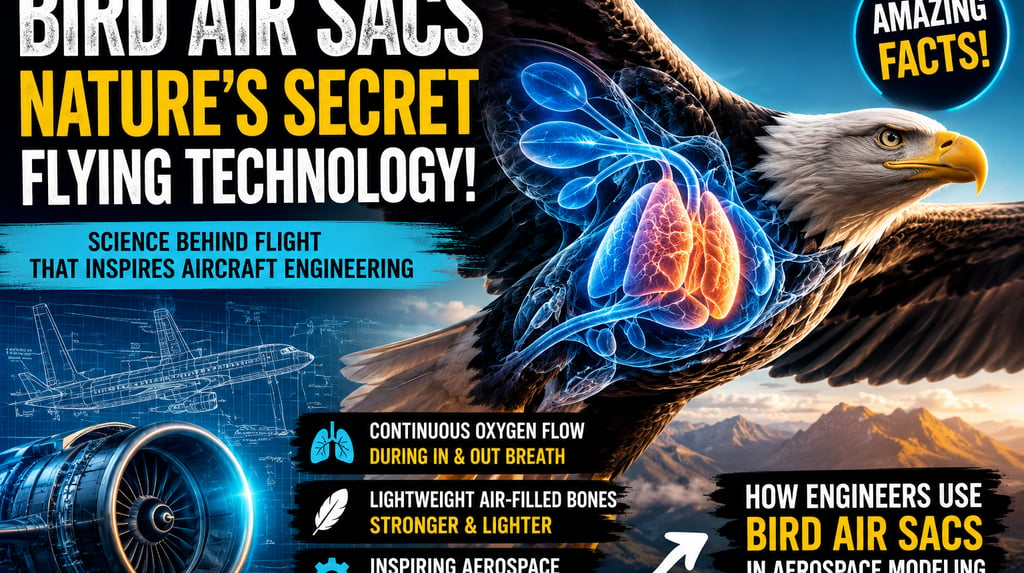
Bird air sacs are specialized structures within the avian respiratory system that play a crucial role in facilitating efficient gas exchange. Unlike mammalian lungs, which function primarily through a tidal flow of air, the avian respiratory system is characterized by a unidirectional airflow. This unique feature is largely attributed to the presence of air sacs, which are interconnected air-filled spaces that extend from the lungs and into various bones throughout a bird's body.
Bird air sacs serve multiple functions; they act as reservoirs for air, allowing for continuous airflow through the lungs during both inhalation and exhalation. This innovation maximizes oxygen uptake and improves overall respiratory efficiency. When a bird inhales, air first enters the air sacs, where it is stored and then directed towards the lungs. Upon exhalation, spent air, which is low in oxygen, is expelled from the lungs, ensuring that fresh, oxygen-rich air continually passes through the respiratory system. This constant flow of air results in a highly efficient mechanism for gas exchange, making it easier for birds to sustain high metabolic rates required for activities such as flying.
The evolution of bird air sacs can be attributed to the demands of flight, which necessitates a highly efficient respiratory system. By developing a mechanism that allows for unidirectional airflow, birds have successfully adapted to an energetic lifestyle. Compared to mammalian lungs, which can become less efficient at higher altitudes, bird air sacs contribute to the ability of birds to thrive in various environmental conditions, including high altitudes where oxygen levels are lower.
In summary, bird air sacs represent an extraordinary adaptation that not only enhances respiratory efficiency but also highlights the evolutionary intricacies within the avian species, setting a fascinating precedent for advancements in aerospace engineering.
Types of Bird Air Sacs
The avian respiratory system is a remarkable adaptation that enhances gas exchange and supports the high metabolic demands of flight. Bird air sacs, integral to this system, are divided into specific types, each serving distinct functions.
The cervical air sacs are positioned in the neck region. These sacs play a critical role in ventilating the respiratory system by allowing fresh air to flow over the lungs continuously. During inhalation and exhalation, the cervical sacs store air, enhancing the efficiency of breathing, particularly during high-energy activities such as flying.
Next, the clavicular air sacs are closely associated with the collarbone area. These sacs not only aid in respiration but also assist in reducing the overall weight of the bird. Their placement minimizes the center of gravity, which is advantageous during flight. The presence of these sacs contributes to the unique buoyancy birds need while soaring.
The anterior thoracic air sacs are located in the front part of the thoracic cavity. These sacs help in ensuring a continuous flow of air over the lungs, crucial for maintaining high oxygen levels during vigorous activity. By compressing these sacs during exhalation, birds can expel stale air without disrupting the flow of fresh air.
In contrast, the posterior thoracic air sacs are situated at the back of the thorax. They act as reservoirs for oxygen-rich air, which is vital for effective gas exchange. The interaction between the posterior thoracic sacs and the lungs allows for a highly efficient respiratory cycle, essential for sustaining flight.
Lastly, the abdominal air sacs are located in the lower abdomen. These sacs contribute significantly to the overall respiratory mechanics by allowing for the expansion and contraction of the abdomen during breathing. This expansion facilitates a greater volume of air intake, maximizing the efficiency of the entire respiratory system.
Each type of air sac plays a pivotal role in the avian respiratory system, showcasing the complex adaptations that enhance the efficiency of breathing and flight in birds.
How Bird Air Sacs Work
The respiratory system of birds is distinct from that of mammals, primarily due to the presence of air sacs, which play a crucial role in facilitating efficient respiration. This system employs a one-way airflow mechanism that enhances the gas exchange process. When a bird inhales, air travels through the trachea and enters the posterior air sacs. The design of these air sacs allows for a continuous flow of air through the lungs, ensuring that oxygen-rich air is delivered directly to them when exhaling.
Inhalation is a multi-step process. First, the bird inhales, filling its lungs with fresh air. This air then moves into the posterior air sacs, while the stale air exits from the lungs into the anterior air sacs. This unique arrangement allows for a constant supply of oxygen, which is essential for the high metabolic demands of flight. During exhalation, the air sacs contract, pushing the oxygen-rich air from the posterior air sacs into the lungs. Simultaneously, the stale air in the anterior air sacs is expelled out of the body through the trachea. The entire process ensures that birds can maintain a stable and efficient exchange of oxygen and carbon dioxide with every breath.
The double breathing mechanism, consisting of this coordinated inhalation and exhalation, is a hallmark of avian respiration. Unlike mammals, which take alternating breaths in and out, the bird's system allows for continuous airflow. Thus, birds can extract oxygen more efficiently, which is particularly advantageous during flight, where oxygen demand significantly increases. This advanced respiratory architecture not only showcases the wonders of evolutionary adaptation but also serves as an inspiration for the development of aerospace engineering technologies mimicking these biological systems.
Air Sacs and Pneumatic Bones
The respiratory system of birds showcases a remarkable adaptation that allows for a lightweight yet highly efficient means of flight. Central to this system are the air sacs, which work in conjunction with pneumatic bones, creating a unique physiological structure that optimizes avian flight capabilities. Air sacs extend from the lungs and permeate through the skeletal structure, thus contributing to weight reduction by replacing solid bone matter with air-filled cavities.
Pneumatic bones, found in species such as eagles, albatrosses, and falcons, lack the dense construction typical of mammalian bones. Instead, the presence of air spaces within these bones provides significant benefits—mainly, they reduce body weight without compromising structural integrity, thereby enhancing maneuverability. For instance, an eagle’s lightweight yet powerful frame allows it to soar effortlessly at high altitudes, while retaining the strength necessary for capturing prey.
The integration of air sacs and pneumatic bones makes it possible for birds to optimize their oxygen intake and distribution. During inhalation, air flows through the air sacs and into the lungs, allowing for continuous gas exchange even during exhalation. This remarkable adaptation promotes sustained flight abilities, enabling species such as the albatross to travel vast distances with minimal energy expenditure. Additionally, the adaptability of the respiratory system allows birds to thrive in various ecological niches, from agile falcons that require explosive speed for hunting to robust albatrosses that glide over ocean currents.
Overall, the synergistic relationship between air sacs and pneumatic bones exemplifies how evolutionary pressures have shaped the avian anatomy for enhanced flight efficiency. This intricate system, with varying adaptations across species, not only demonstrates the ingenuity of nature but also inspires current aerospace engineering concepts aimed at developing more efficient flight technologies.
Amazing Scientific Facts About Bird Air Sacs
Birds possess a unique respiratory system distinguished by the presence of air sacs, which facilitate a highly efficient method of obtaining oxygen. Here are some remarkable facts about bird air sacs and their functions:
1. Birds have a total of 9 air sacs, allowing for a continuous flow of air through their respiratory system, enhancing gas exchange during both inhalation and exhalation.
2. Air sacs are located strategically throughout the body, with some extending into the bones, which provides lightweight structural support while optimizing oxygen intake.
3. This system enables birds to extract more oxygen than mammals, making them well-suited for high-altitude flight where oxygen levels are lower.
4. The air sacs allow for a unidirectional airflow, ensuring that fresh air flows into the lungs even during exhalation. This feature is critical during strenuous activities like flight.
5. Some bird species, such as migratory birds, can travel thousands of miles without needing to rest, thanks in part to their highly efficient respiratory system.
6. Air sacs play a crucial role in thermoregulation, helping birds manage their body temperature during flight and other activities.
7. They also serve as resonating chambers, assisting in sound production and vocalization; many birds are capable of complex calls due to the resonance created by their air sacs.
8. The air sacs are interconnected with the lungs, increasing the surface area available for gas exchange, which is essential for sustaining high energy levels.
9. In species such as ducks, additional air sacs provide an expanded buoyancy, aiding in floating during activities on water.
10. Birds demonstrate remarkable adaptations in their air sac structures; for instance, condors have particularly large sacs to support their soaring flight.
11. During the breeding season, some birds can modify their respiratory rates and air sac sizes to accommodate increased demands for oxygen.
12. The adaptability of air sacs also facilitates rapid changes in flight behavior, allowing birds to ascend and descend swiftly while maintaining oxygen supply.
13. Avian air sacs have inspired engineering designs such as lightweight materials and airflow systems in aircraft, emulating nature’s efficient solutions.
14. Species like hummingbirds possess specialized air sac adaptations that enable their exceptional hovering capabilities, as they can draw in fresh air with minimal movement.
15. Lastly, the evolution of air sacs in birds showcases a remarkable example of adaptation, illustrating how these structures have contributed to their survival and success in various environments.
Bird Species With Exceptional Respiratory Adaptations
Birds exhibit a myriad of respiratory adaptations that allow them to excel in their respective environments. Each of these adaptations plays a crucial role in their survival, influencing their flight capabilities, stamina, and overall efficiency. Among the avian species known for their remarkable respiratory systems are the peregrine falcon, bar-headed goose, wandering albatross, golden eagle, and hummingbird.
The peregrine falcon, known for being the fastest bird, displays impressive respiratory adaptations that support its high-speed hunting. Its unique air sacs enhance oxygen exchange during rapid flight, allowing it to sustain short bursts of intense speed while maintaining optimal oxygen levels.
The bar-headed goose, which migrates over the Himalayas, showcases extraordinary adaptations to thrive in high-altitude environments. This species possesses a highly efficient respiratory system that maximizes oxygen uptake in thin air. The bar-headed goose's specialized air sacs enable it to extract as much oxygen as possible while adapting to extreme temperatures and reduced atmospheric pressure.
Next, the wandering albatross, famous for its remarkable wingspan, relies on its efficient lungs and air sacs to power its long-distance flights across oceans. The albatross’s respiratory system is designed for an economical use of oxygen, facilitating sustained flight without excessive energy expenditure.
The golden eagle, as a skilled predator, exhibits adaptations that enhance its aerial agility. The bird's respiratory system is optimized to deliver a continuous flow of oxygen during high-altitude pursuits, allowing it to maintain energy levels while maneuvering at great heights.
Finally, the hummingbird is a unique member of the avian family, exhibiting one of the most specialized respiratory systems of all. Its high metabolism and rapid wing beats necessitate an efficient mechanism to meet its oxygen demands. Hummingbirds have an intricate network of air sacs that provide a constant supply of fresh air, enabling them to hover and sustain intense activity levels.
How Bird Air Sacs Inspire Aerospace Engineering
Birds possess a highly efficient respiratory system characterized by air sacs that enable continuous airflow through their lungs. This unique biological design has piqued the interest of engineers, igniting inspiration for innovative solutions in aerospace engineering. The concept of biomimicry plays a pivotal role as researchers examine how avian air sac functionality can translate into more effective aircraft ventilation systems.
The structure of bird air sacs allows for a constant supply of oxygen, significantly enhancing the efficiency of respiration. When engineers apply this concept to aircraft, they aim to create ventilation systems that mimic the active flow of air, ensuring optimal atmospheric conditions for both crew and passengers. By studying how birds manage air quality and pressure over long distances, aerospace designers seek to improve cabin environments, thereby positively impacting passenger comfort and safety.
In addition to ventilation systems, the lightweight nature of bird skeletal structures influences aerospace design. Much like avian bones, which are hollow yet strong, the implementation of lightweight materials in aircraft reduces overall weight, thereby improving fuel efficiency. Engineers are increasingly incorporating materials that mimic these avian characteristics, giving rise to more sustainable aircraft without sacrificing structural integrity.
Drone technology also benefits from the study of bird air sacs. By understanding avian flight dynamics, researchers and engineers develop drones that can replicate the agile maneuvers of birds. Moreover, the principles derived from bird physiology extend to future aerospace technologies, such as energy-efficient aircraft propulsion systems that utilize principles found in avian flight.
Current Scientific Research
The study of avian respiration and flight mechanics has become an increasingly prominent field within the scientific community, driven by the intricate designs of bird air sacs that enable efficient breathing during flight. Recent research has focused on deciphering the complexities of these respiratory systems, which are not only unique to birds but also exemplify evolutionary adaptations that enhance their ability to fly at high altitudes and endure strenuous activities. Understanding the operation of air sacs can provide insights into advanced respiratory systems, holding potential applications in various fields, including medicine and aerospace engineering.
Ongoing studies have utilized advanced imaging techniques and modeling software to analyze how avian species manage air flow through their complex lung structures. These research efforts emphasize the role of air sacs in maintaining a continuous flow of oxygen through the lungs, ensuring that birds can efficiently extract oxygen even when exhaling. By comparing different bird species and their unique adaptations, scientists are uncovering the evolutionary pathways that lead to these specialized respiratory systems, which serve as an inspiration for the development of biomimetic solutions in engineering.
Moreover, biomimetic engineering is leveraging the principles of avian respiration to enhance the design of aircraft. Inspired by how birds utilize their air sacs, engineers are exploring new aerodynamic shapes and airflow management systems that improve the efficiency of planes, potentially reducing fuel consumption and increasing flight performance. As researchers delve deeper into the physiology of bird air sacs, findings are expected to influence innovations in the aviation sector, highlighting the interconnectedness of biological systems and technological advancements. The commitment to understanding these complex mechanisms underscores a fascination with nature's ingenuity, underscoring how the study of birds can lead to breakthrough developments in multiple industries.
Frequently Asked Questions (FAQ)
1. What are bird air sacs?
Bird air sacs are specialized, thin-walled structures within the respiratory system of birds that serve to facilitate efficient breathing and gas exchange during flight and daily activities. They work alongside the lungs to enhance airflow and oxygen supply.
2. How many air sacs do birds have?
The majority of bird species have a total of nine air sacs: two cervical air sacs, two anterior thoracic sacs, two posterior thoracic sacs, and two abdominal sacs, along with a single interclavicular sac. This complex arrangement allows for a continuous flow of air through the respiratory system.
3. What is the primary function of air sacs in birds?
Air sacs primarily function to store and circulate fresh air, helping to provide a constant supply of oxygen during both inhalation and exhalation cycles. This adaptation is particularly crucial for ensuring high metabolic rates required for flight.
4. Do air sacs help in thermoregulation?
Yes, bird air sacs play a role in thermoregulation. By aiding in evaporative cooling, they can help birds maintain an optimal body temperature, especially during exertion or in hot environments.
5. How do air sacs enhance the efficiency of bird lungs?
Air sacs enhance lung efficiency by providing a continuous flow of air, ensuring that oxygen is absorbed more effectively and that carbon dioxide is expelled without pausing the breathing cycle. This mechanism is vital for sustaining flight-related activities.
6. Are bird air sacs similar to mammalian lungs?
No, bird air sacs differ significantly from mammalian lungs. While mammalian lungs rely on a tidal flow of air, bird air sacs utilize a unidirectional airflow system that allows for more effective gas exchange.
7. Can bird air sacs be affected by environmental factors?
Yes, environmental factors such as altitude, temperature, and humidity can impact the efficiency of air sacs. Birds at higher altitudes may experience changes in oxygen levels affecting their respiratory function.
8. What role do air sacs play during vocalization?
Bird air sacs contribute to vocalization by providing air pressure that is expelled through the syrinx, allowing birds to produce a wide range of sounds and songs relevant to communication and mate attraction.
9. How do air sacs develop in young birds?
Air sacs begin to develop during the embryonic stage and continue to grow as the chick matures. This development is essential for enhancing respiratory capacity in young birds as they transition to independent life.
10. What can we learn from bird air sacs in relation to aerospace engineering?
The unique design and functionality of bird air sacs have inspired aerospace engineering advancements, particularly in developing efficient ventilation systems and aircraft designs that optimize airflow and improve performance.
Conclusion
In summary, the remarkable respiratory system of birds, characterized by their unique air sacs, serves as a testament to the ingenuity of nature. Through a detailed examination of how these air sacs function, it becomes evident that they not only enhance the efficiency of gas exchange during flight but also provide vital insights into advanced biological engineering. The ability of birds to utilize a unidirectional airflow system dramatically increases their oxygen intake, a principle that has sparked interest in various scientific and engineering disciplines.
This understanding of avian respiratory mechanics has led to significant breakthroughs in aerospace engineering, where concepts inspired by bird air sacs are increasingly being applied. For example, the development of more efficient aircraft engines and innovative designs aimed at improving fuel efficiency can be traced back to the study of these natural systems. By mimicking the strategies employed by birds to enhance their respiratory efficiency, engineers can design technologies that not only reduce energy consumption but also improve overall performance.
Furthermore, the implications of this knowledge extend beyond aviation. The principles derived from bird air sacs are influencing advances in medical devices and breathing apparatuses that can potentially enhance respiratory treatments in humans. As we continue to unravel the mysteries of bird physiology, it is clear that nature remains the greatest engineer, offering invaluable lessons and inspirations for human innovation.