Animal Kingdom Science: Amazing Animal Facts, Behaviors, Adaptations, and Wildlife Discoveries Explained
5/31/202615 min read
Engaging Introduction
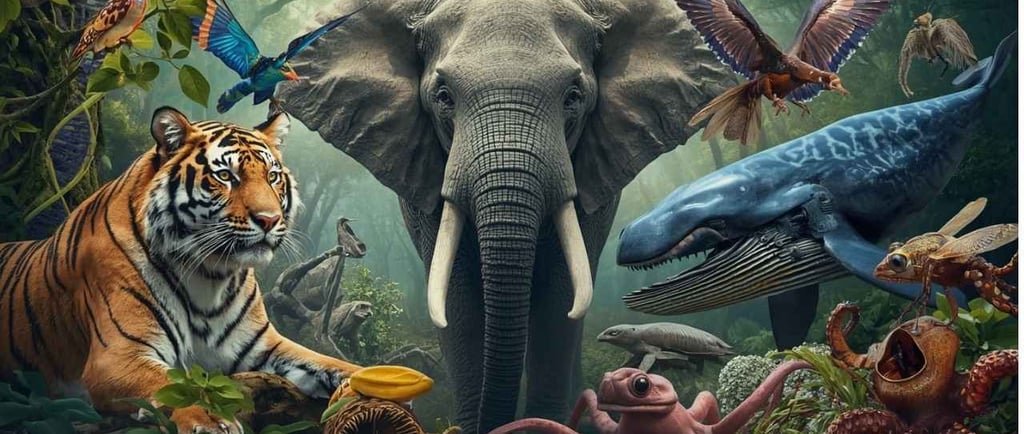
The animal kingdom is a tapestry of astonishing life forms that captivate our curiosity and fuel scientific inquiry. With millions of species ranging from the majestic blue whale to the minute tardigrade, the diversity of life is not only staggering but also vital to the health of ecosystems worldwide. Every interaction between organisms, whether predatory, symbiotic, or competitive, showcases the intricate balance that sustains life on Earth.
In recent years, research has revealed extraordinary adaptations in animals, sparking new perspectives in fields such as behavioral science, ecology, and evolutionary biology. For instance, the mimic octopus exhibits remarkable camouflage capabilities, allowing it to imitate the appearance and behavior of more than fifteen different marine species. This adaptability not only aids in survival but also serves as a fascinating topic of study within both marine biology and ethology.
The methods used by scientists to explore these realms of animal behavior and wildlife diversity are as varied as the species themselves. Advances in technology have enabled researchers to utilize non-invasive techniques such as remote sensing and DNA barcoding. Through these innovations, we are gaining unprecedented insight into animal movement patterns, habitat preferences, and genetic diversity, enhancing our understanding of species interaction with their environment.
Moreover, startling discoveries continually reshape our understanding of the animal kingdom. For instance, scientists have proposed theories regarding interspecies communication, suggesting that various species employ sophisticated methods to convey messages, whether it be through vocalizations, body language, or chemical signals. Each revelation deepens our appreciation of the complexities within ecosystems, reminding us of our responsibility to conserve these delicate balances.
This exploration of the animal kingdom is not merely an academic endeavor; it is essential for informing conservation efforts and understanding our own role within these interconnected systems. By delving into the fascinating facts and behaviors of various animal species, we also learn about the intrinsic value of the natural world and the urgency of preserving its myriad forms.
What is Animal Kingdom Science?
Animal Kingdom Science encompasses the systematic study of animals, including their behavior, anatomy, physiology, and ecological interactions. This field is a crucial subset of zoology and ecology, providing insights into the complex biological processes that govern the life of animals and their roles in various ecosystems. Understanding animal behavior and physiology is essential for determining how species adapt to their environments, find food, reproduce, and interact with other organisms.
The principles guiding the study of animals involve both observational and experimental techniques. Researchers in this field utilize a variety of methodologies, from field studies in natural habitats to controlled laboratory experiments, aiming to gather comprehensive data about animal life. By examining physical structures, such as bones and muscles, alongside behavioral patterns, scientists can develop a holistic understanding of animal biology.
Historically, the study of animals can be traced back to ancient civilizations, where early scholars made significant observations regarding animal behavior and anatomy. Over time, this interest evolved into a more structured discipline, leading to major discoveries and the establishment of zoology as a formal science during the 18th and 19th centuries. The advent of technologies such as microscopy and genetics has further advanced our understanding of the Animal Kingdom.
In contemporary times, Animal Kingdom Science has integrated advancements in technology and interdisciplinary approaches, drawing on ecology, environmental science, and genetics. Researchers now examine the impact of climate change, habitat destruction, and human activities on animal populations, contributing to conservation efforts. Understanding the intricate dynamics of animal life is essential not only for scientific inquiry but also for fostering a sustainable coexistence with the rich biodiversity on our planet.
Classification of Animals
The classification of animals is a systematic approach used to categorize diverse species based on shared characteristics and evolutionary relationships. This taxonomy is generally structured in hierarchical levels that begin with the broadest categories, such as kingdom, and narrow down to the most specific, which is species. The primary taxonomic ranks include kingdom, phylum, class, order, family, genus, and species.
At the top of this hierarchy, the kingdom Animalia encompasses all animals, characterized by their multicellular nature, heterotrophic modes of nutrition, and absence of cell walls. Within this kingdom, the phylum Chordata includes animals possessing a notochord, such as vertebrates. Classes within Chordata highlight significant distinctions, for example, Mammalia, encompassing all mammals, are defined by their mammary glands which produce milk, while Aves includes birds characterized primarily by feathers and hollow bones.
Further classification continues with orders; for instance, Carnivora includes carnivorous mammals like lions and bears, while Primates encompasses humans, monkeys, and apes, recognized for their highly developed brains and social structures. Each family within these orders, like Felidae for cats or Hominidae for great apes, brings species closer together based on genetic and physical similarities. This classification culminates in the genus and ultimately species, where individual organisms are identified, such as Panthera leo for the African lion.
The importance of this classification system lies not only in the identification and naming of organisms but also in understanding evolutionary relationships and biological diversity. By studying these hierarchical groups, scientists gain insights into how species have evolved over time and their interactions with one another within ecosystems. This structured approach enables researchers to predict characteristics and behaviors based on shared ancestry, thus enriching our overall understanding of the animal kingdom.
Mammals, Birds, Reptiles, Amphibians, Fish, and Invertebrates
The animal kingdom is incredibly diverse, comprising various groups including mammals, birds, reptiles, amphibians, fish, and invertebrates. Each of these groups is characterized by unique features, adaptations, and roles within ecosystems.
- Mammals:
- Warm-blooded vertebrates with hair or fur.
- Most give birth to live young and produce milk for their offspring.
- Examples: Lions (Panthera leo), whales (Balaenoptera musculus), and bats (Chiroptera).
- Birds:
- Warm-blooded vertebrates characterized by feathers and beaks.
- Most are capable of flight, though some species have lost this ability over time.
- Examples: Eagles (Aquila), penguins (Spheniscidae), and sparrows (Passeridae).
- Reptiles:
- Cold-blooded vertebrates with scaly skin; include turtles, snakes, and lizards.
- Most lay eggs and have adapted to various terrestrial environments.
- Examples: Crocodiles (Crocodylidae), iguanas (Iguanidae), and rattlesnakes (Crotalus).
- Amphibians:
- Cold-blooded vertebrates with a life cycle that typically includes both aquatic and terrestrial phases.
- Skin is permeable, facilitating gas exchange; most are found near water sources.
- Examples: Frogs (Anura), salamanders (Caudata), and newts (Salamandridae).
- Fish:
- Cold-blooded vertebrates that live in water and have gills for breathing.
- They possess fins for swimming and are critical for aquatic ecosystems.
- Examples: Salmon (Salmo), clownfish (Amphiprioninae), and sharks (Selachimorpha).
- Invertebrates:
- Animals without a backbone, making up a vast majority of animal species.
- Includes diverse groups like insects, arachnids, mollusks, and others.
- Examples: Butterflies (Lepidoptera), octopuses (Cephalopoda), and jellyfish (Cnidaria).
Understanding these major animal groups is essential for grasping their significance in ecological balance and their interconnected roles in various habitats. Their adaptations and behaviors contribute to biodiversity and the resilience of ecosystems worldwide.
Amazing Animal Behaviors
Animal behavior is a vast field of study, revealing intricate patterns and adaptations that are crucial for survival and reproduction across various species. One of the most compelling behaviors observed in the animal kingdom is migration. Many species, such as the monarch butterfly and the Arctic tern, travel thousands of miles annually, driven by climatic changes and the availability of food. These migratory patterns not only ensure access to resources but also play a significant role in breeding success, allowing animals to exploit different environments at different times of the year.
Moreover, mating rituals are a remarkable facet of animal behavior. Take the courtship displays of birds of paradise as an example; the males exhibit elaborate feather displays and intricate dances to attract females. These behaviors are not merely for show; they reflect the health and genetic fitness of the individuals, allowing females to select mates that will likely produce viable offspring. Such sexual selection pressures contribute to the development of diverse traits within species, driving evolution.
Social structures are another vital aspect that influences animal behavior. Species such as wolves and elephants exhibit complex social dynamics, where cooperation and communication are essential for group survival. In wolf packs, for instance, hierarchical structures determine social interactions and hunting strategies, enhancing their effectiveness in capturing prey. Similarly, elephants display high levels of empathy and social bonding, which help in raising young and navigating their environments. These social behaviors enable species to adapt to their ecosystems, fostering both individual and community survival.
In summary, the diverse array of behaviors seen in the animal kingdom exemplifies the intricacies of life and survival strategies that have evolved over millennia. By studying these behaviors, we gain insights into the adaptations that define species and their success in the wild.
Animal Intelligence and Communication
The study of animal intelligence showcases a remarkable spectrum of cognitive abilities present across various species. Research has demonstrated that intelligence is not exclusive to humans; numerous animals exhibit problem-solving skills, the ability to plan, and nuanced social interactions. For instance, primates like chimpanzees have been observed using tools to obtain food, exhibiting both foresight and understanding of their environment. Birds, particularly species like crows and parrots, have astonishing problem-solving capabilities, including the use of objects as tools, which indicates a high level of cognitive processing.
Effective communication among animals is equally fascinating and can occur through multiple channels including vocalizations, body language, and chemical signals. Many species have developed distinct vocalizations that are not only situational but can convey complex meanings. For example, the varied calls of dolphins serve crucial functions in social bonding and coordination during hunting. Similarly, the songs of birds can establish territories or attract mates, demonstrating sophisticated acoustic communication.
Body language also plays a critical role in animal interactions. Within pack animals, such as wolves, subtle gestures and postures can indicate social hierarchies and collective movements. Furthermore, the behavior of animals like dogs—which incorporate both verbal commands and body cues—highlights their capacity to interpret human signals, thus underscoring the intricacies of interspecies communication.
Chemical signaling, though less immediately observable, is vital in the animal kingdom as well. Many creatures, such as ants and bees, communicate through pheromones to convey information about food sources and threats to their colonies, which is a form of chemical communication that enables coordinated group actions.
Feeding Adaptations and Survival Strategies
Feeding adaptations are crucial for animal survival, influencing dietary choices and shaping how species interact with their environment. Animals have evolved three primary feeding strategies: herbivory, carnivory, and omnivory. Herbivores, such as cows and deer, have developed specialized teeth and digestive systems to break down plant materials efficiently. Their grazing habits not only nourish them but also play a vital role in maintaining ecological balance within grasslands and forests.
Carnivores, on the other hand, like lions and eagles, are equipped with sharp teeth and keen senses that aid in hunting prey. Their adaptations allow them to be effective predators, ensuring their survival through the selection of suitable habitats and the control of herbivore populations. Interesting behaviors, such as pack hunting seen in wolves, further enhance their success in capturing food.
Omnivores demonstrate immense flexibility in their feeding habits, consuming both plants and animals. Species like bears and raccoons adapt their diets based on seasonal availability, showcasing their adaptability and resilience in varying environments. This dietary variety not only supports their survival but also contributes to the health of their ecosystems by aiding the dispersal of plant seeds.
In addition to feeding strategies, animals have developed several remarkable survival techniques. Camouflage is one prominent adaptation; species like the chameleon and stick insect utilize coloration to blend into their surroundings, protecting them from predators. Mimicry is another fascinating strategy, as seen in the viceroy butterfly, which resembles the toxic monarch butterfly to deter would-be predators. Moreover, cooperation among animals, such as in social insects like bees and ants, fosters survival, allowing them to work together in gathering resources and defending against threats.
Evolution and Natural Selection in the Animal Kingdom
The principles of evolution and natural selection are foundational concepts that explain the diversity of life forms within the animal kingdom. Evolution, defined as the change in the heritable characteristics of biological populations over successive generations, is primarily driven by natural selection. This process involves the differential survival and reproduction of individuals due to variations in traits, which can lead to adaptations that enhance survival and reproduction in specific environments.
Evidence supporting the theory of evolution is abundant and diverse. One of the most compelling forms of evidence is found in the fossil record, which showcases a chronological account of various species that have existed over millions of years. Transitional fossils, such as those illustrating the progression from dinosaurs to birds, provide critical insights into how evolutionary changes occur. Furthermore, fossilized remains often reveal anatomical similarities between extinct species and contemporary animals, underscoring a lineage of descent.
Genetic studies also play a pivotal role in understanding evolution within the animal kingdom. Molecular evidence, including DNA sequencing, reveals how genetic variations correspond to physical traits observed in species today. These genetic similarities and differences can trace the evolutionary relationships and common ancestors shared among various species, contributing to our understanding of biodiversity.
Moreover, observed traits in animal populations offer further support for the mechanisms of natural selection. For instance, the prevalence of certain colors or behaviors in animal populations can be linked to environmental pressures, such as predation or climate changes, leading to adaptations that promote survival. Such observations reinforce the dynamic interplay between traits and the environments in which they manifest.
In essence, the integration of fossil records, genetic studies, and observed traits elucidates the intricate process of evolution and natural selection that shapes the animal kingdom, ultimately contributing to the rich tapestry of biodiversity we observe today.
Biodiversity and Ecosystem Importance
Biodiversity, defined as the variety of life in a particular habitat or ecosystem, plays a critical role in maintaining the health and stability of the environment. It encompasses the different species of plants, animals, fungi, and microorganisms, and their interactions within ecosystems. Healthy ecosystems are dependent on biodiversity, as various species contribute uniquely to ecological balance, nutrient cycling, and essential ecosystem services.
Each species within an ecosystem fulfills specific functions, meaning the loss of any species can disrupt ecological balance. For instance, pollinators such as bees are vital for the reproduction of many plants, while predators help regulate species populations, preventing any particular species from becoming overly dominant. Furthermore, diverse ecosystems are more resilient to stressors, such as climate change and disease outbreaks, as they can utilize various strategies and resources to adapt.
Currently, biodiversity is under significant threat, with estimates suggesting that nearly one million species are at risk of extinction within the next few decades. These alarming statistics indicate that human activities, such as habitat destruction, pollution, and climate change, are major contributors to biodiversity loss. According to the United Nations, around 75% of the land environment and about 66% of the marine environment have been significantly altered by human actions, leading to a decline in natural habitats.
The loss of biodiversity, therefore, jeopardizes the ecosystem services that humans depend on, including food production, clean water, carbon storage, and recreational opportunities. Preservation of biodiversity is essential not only for maintaining ecological balance but also for supporting human well-being and economic prosperity. Recognizing the importance of biodiversity and taking actionable steps towards conservation can help safeguard the delicate balance within ecosystems for future generations.
Endangered Species and Conservation Efforts
The plight of endangered species has become a critical concern for environmentalists and wildlife enthusiasts alike. Various species across the globe are facing an alarming decline in their populations, primarily due to habitat loss, poaching, climate change, and pollution. These factors not only threaten the survival of specific animals but also jeopardize the entire ecosystem that depends on biodiversity for sustainability.
One of the most notable factors contributing to the decline of endangered species is habitat destruction. As urban areas expand and agriculture grows, natural habitats are continuously encroached upon, leading to the displacement of wildlife. Furthermore, climate change has exacerbated these challenges by altering natural habitats and food sources, making survival increasingly difficult for vulnerable species.
Conservation efforts have been established worldwide to combat the decline of endangered species and to support biodiversity conservation. Numerous organizations and governmental bodies are working diligently to protect at-risk wildlife through various strategies. For instance, protected areas such as national parks and wildlife reserves have been established to provide safe havens for endangered species, allowing populations to recover without the threat of human interference.
Moreover, community-based conservation initiatives have shown success by involving local populations in wildlife protection strategies while promoting sustainable livelihoods. Such programs help foster a sense of ownership and responsibility among local communities in protecting their natural resources. Examples of successful conservation organizations include the World Wildlife Fund (WWF) and the International Union for Conservation of Nature (IUCN), both of which have undertaken extensive efforts to raise awareness and implement conservation policies targeted at preserving endangered species.
Through concerted efforts in habitat preservation, legislative measures, and community involvement, many endangered species have witnessed promising recoveries. While challenges remain, these successful conservation strategies serve as a blueprint for ongoing efforts to ensure a sustainable future for endangered wildlife.
Recent Scientific Discoveries in Zoology
Recent advancements in zoology have led to significant discoveries that enhance our understanding of animal behavior, physiology, and genetics. One notable finding involves the intricate social structures within certain mammalian communities. Researchers have identified complex communication systems among elephants, highlighting their abilities to convey emotions, warn of dangers, and even engage in mourning rituals. This knowledge emphasizes the importance of social bonds in elephant herds, broadening the scope of wildlife conservation efforts aimed at preserving their natural habitats.
In the realm of genetics, breakthroughs in CRISPR technology have permitted scientists to delve deeper into the genetic makeup of various species. For example, a study on the genome of the endangered Amur leopard has revealed genes associated with adaptability and disease resistance. Such insights can inform breeding programs and conservation strategies, aimed at bolstering populations of at-risk species. The implications of these genomic discoveries are profound, as they not only shed light on evolutionary processes but also pave the way for novel conservation methodologies.
Moreover, advancements in animal physiology have unveiled fascinating insights into the ways animals adapt to changing environments. Research conducted on coral reefs has demonstrated that certain species of fish possess remarkable physiological changes that allow them to withstand increased ocean temperatures. This adaptability is a key factor in determining the resilience of marine ecosystems in the face of climate change. The understanding of these physiological mechanisms is essential for future environmental management strategies aimed at sustaining biodiversity.
These recent discoveries in zoology not only enrich our comprehension of the animal kingdom but also underscore the pressing need for ongoing research and conservation initiatives. The integration of behavioral, genetic, and physiological studies provides a holistic view that is critical for developing effective strategies to protect wildlife and their habitats, ensuring the continuation of biodiversity in our rapidly changing world.
Interesting Animal Facts
The animal kingdom is home to innumerable fascinating creatures, each displaying a myriad of adaptations and behaviors that inspire intrigue and awe. One such remarkable creature is the octopus, particularly the common octopus. Known for its exceptional intelligence, it possesses the ability to use tools, change color, and even escape from tight situations, showcasing both its adaptability and problem-solving skills.
Moving from ocean marvels to the sky, the peregrine falcon holds the title for the fastest bird and is reputed to be the fastest animal on Earth. During its hunting stoop, it can reach speeds of over 240 miles per hour, a testament to its incredible agility and strength. Such speed not only assists in capturing prey but also emphasizes the evolutionary traits that enable this bird to thrive.
Additionally, the Arctic Tern stands out for its remarkable migratory journey, traveling up to 44,000 miles annually from its breeding grounds in the Arctic to its wintering areas in the Antarctic. This incredible endurance reflects the adaptability of the species to exploit diverse environments and seasonal shifts.
In contrast to avian feats, the mimic octopus has emerged as a master of disguise in underwater ecosystems. Capable of impersonating other marine species, including lionfish and flatfish, it utilizes this unique behavior for both evading predators and approaching potential prey. Such remarkable mimicry not only ensures its survival but also highlights the intricate complexities of animal behaviors.
Another astonishing fact can be found in the realm of social structures; African elephants demonstrate profound emotional intelligence, forming deep bonds with one another. Their ability to feel grief, joy, and empathy illustrates the social complexity within animal groups, shattering previously held notions about the emotional capacities of non-human species.
Frequently Asked Questions (FAQ)
Animal Kingdom science encompasses various aspects of biology, ecology, and conservation. Here, we address some common inquiries related to taxonomy, behavior, evolution, and conservation strategies.
1. What is taxonomy in the context of the animal kingdom?
Taxonomy refers to the science of classification, where organisms are organized into hierarchical categories such as domain, kingdom, phylum, class, order, family, genus, and species. This system allows scientists to identify and categorize animals based on shared characteristics, evolutionary relationships, and genetic similarities. Understanding taxonomy is crucial for biodiversity conservation and species protection.
2. How do animals adapt their behavior to survive?
Animal behavior is often driven by the need to survive and reproduce. Through adaptation, animals develop behavioral traits that enhance their ability to find food, evade predators, and navigate their environments. For instance, certain species exhibit migratory behavior in response to changing seasons, while others may engage in social behaviors that facilitate cooperative hunting or breeding. These adaptations can evolve over generations through natural selection.
3. What evidence supports the theory of evolution in the animal kingdom?
The theory of evolution is supported by several lines of evidence, including fossil records that document the gradual changes in species over time, genetic variations observed in populations, and comparative anatomy that reveals similarities between different animals. Molecular biology also provides insights through DNA analysis, allowing scientists to trace lineage and evolutionary pathways. These findings collectively enhance our understanding of how diverse life forms have arisen and diversified.
4. Why is conservation important for animal species?
Conservation is vital for maintaining biodiversity and ecological balance. As habitats shrink due to human activities such as deforestation and urban development, conservation strategies aim to protect endangered species and restore natural ecosystems. Initiatives such as establishing protected areas, implementing breeding programs, and promoting sustainable practices help mitigate the impact of environmental changes, ensuring the survival of various species.
By addressing these FAQs, readers can gain a clearer understanding of the fascinating elements that define animal kingdom science.
Conclusion
Throughout this exploration of the animal kingdom, we have uncovered a multitude of fascinating facts and behaviors exhibited by various wildlife species. From the intricate communication methods utilized by elephants to the remarkable migratory patterns of birds, each aspect of animal life serves as a testament to the complexity and interconnectedness of nature. These insights not only enhance our understanding of specific species but also illuminate the broader ecological systems they inhabit.
The importance of safeguarding wildlife cannot be overstated. As countless animal species face threats from habitat destruction, climate change, and poaching, it becomes imperative that we advocate for conservation efforts and sustainable practices. By protecting the diverse array of species within the animal kingdom, we ensure the preservation of ecological balance, which is vital for the health of our planet. A deepened appreciation for wildlife fosters a sense of responsibility among individuals to take action, whether through supporting conservation organizations, participating in wildlife protection initiatives, or simply educating others about the significance of biodiversity.
In closing, understanding the animal kingdom not only enriches our knowledge but also emphasizes our role as stewards of the environment. It is incumbent upon us to engage with and protect wildlife to maintain the delicate balance that sustains life on Earth. We encourage readers to explore more about their local ecosystems, participate in wildlife monitoring programs, and remain informed about the challenges faced by animals in their natural habitats. By doing so, we contribute to a brighter future for both humans and the remarkable creatures with whom we share the planet.